
Sometimes, the smartest way to build a successful business is to start small enough to survive long enough to become big.
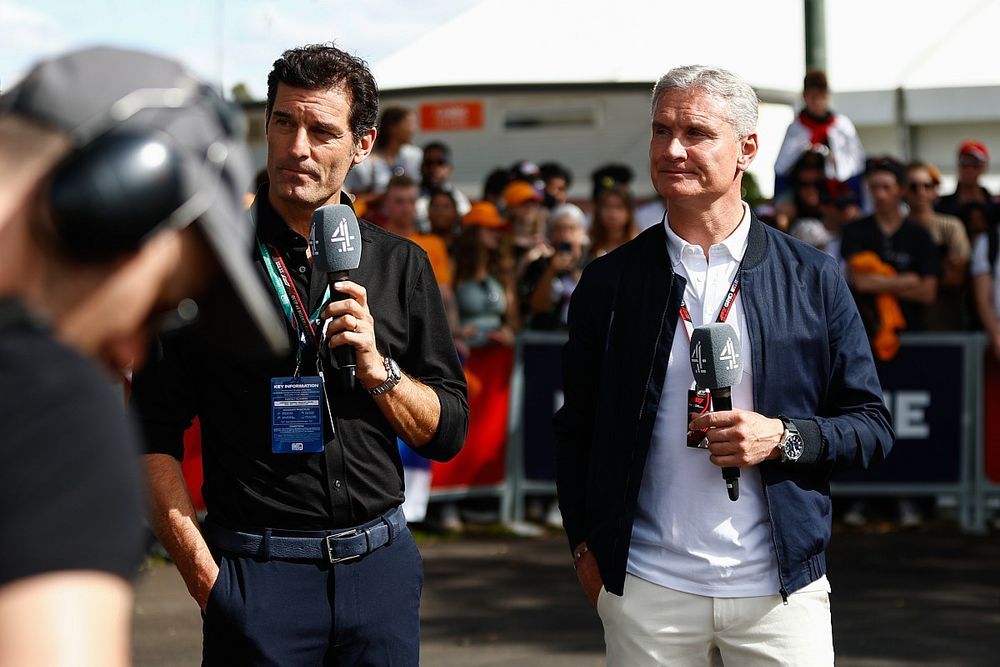
In 2010, three people who knew the Formula 1 world extremely well decided to start something of their own.
Jake Humphrey, a television presenter; David Coulthard, a former Formula 1 driver; and Sunil Patel, a highly experienced BBC Sport producer, had something many entrepreneurs spend years trying to acquire: deep industry knowledge, strong relationships and a clear understanding of their customers’ world.
But they did not have much else.
No office.
No history.
No infrastructure.
No staff.
And, by their own admission, “from the business perspective absolutely no idea what we were doing.”
That was the beginning of Whisper.
Today, Whisper is an established sports and entertainment production company working across major international events and brands.
But its story did not begin with scale.
It began with an observation.
When the Opportunity Is Right in Front of You
Jake, David and Sunil were working around Formula 1 for the BBC when they noticed something that bothered them.
The main content being presented by sponsors was, in their view, “rubbish.”
Each video represented a wasted opportunity.
Brands were investing in Formula 1 and had access to extraordinary athletes, teams, stories and locations. Yet much of the content being produced was not making the most of that opportunity.
For the three founders, this was more than a criticism.
It was a business opportunity.
They understood the sport.
They understood television.
They understood storytelling.
And they could see that brands wanted better ways to communicate through sport.
The opportunity was not necessarily to create another traditional production company.
It was to combine their experience and create something different.
As Whisper later described its philosophy, the ambition was to combine entertainment with editorially led, opinionated sports coverage.
The idea was there.
But an idea is not a business.
And that is where the real challenge began.
The Challenge: Starting Without the Resources
Whisper’s founders faced a problem familiar to many entrepreneurs and business leaders:
How do you build credibility when you don’t yet have the resources to look credible?
They had no office, no history, no infrastructure, no staff and no large portfolio of clients.
From a conventional business perspective, the obvious answer might have been to wait until the ideal conditions existed:
Raise capital.
Rent an office.
Hire a team.
Build infrastructure.
Develop the organization.
Then go to market.
But instead, they chose another route.
They started with what they had:
Their experience.
Their relationships.
Their knowledge of Formula 1.
And their ability to create something customers would value.
This is an important lesson for businesses of all sizes.
When considering a new business, product, service or strategic initiative, the instinct is often to build everything before testing whether customers actually want it.
The logic seems sensible:
“If we want to be taken seriously, we need to look established.”
But this can create a dangerous situation.
Costs start accumulating before revenues do.
People are hired. Technology is purchased. Offices are rented. Processes are created. Marketing is developed.
And suddenly the business has a substantial cost base before the market has demonstrated that the proposition works.
This is the cash-burn period — the period when costs exist but revenues are nil or still very limited.
For a young company, this can be fatal.
Whisper’s story illustrates another approach:
Start with the minimum necessary to test the opportunity.
Then let evidence determine what you build next.
3 The First Big Opportunity
The breakthrough came when the Williams Formula 1 team took a chance on Whisper and commissioned the company to produce content.
This was significant.
Not simply because it generated revenue, but because it provided something potentially even more valuable to a new company:
proof.
Proof that someone was willing to trust them.
Proof that their proposition had value.
Proof that the idea could work in the real world.
And only then did the founders decide they might actually need an office.
The sequence is important.
They did not build the infrastructure and then wait for the business.
The business came first. The infrastructure followed.
The first client therefore did more than generate revenue.
It created a foundation on which the business could grow.
What If You Don't Need to Be Big to Look Valuable?
There is another important lesson in Whisper’s story.
The founders did not initially compete on the basis of size.
They competed on the basis of relevance.
They knew their industry.
They knew the problems.
They knew the people.
And they believed they could create better content.
For a new company, that can be a powerful competitive advantage.
Large organizations often have more resources.
But smaller organizations can have greater speed, fewer layers of decision-making, greater flexibility, closer customer relationships, lower fixed costs and a greater willingness to experiment.
Being small is not necessarily a disadvantage.
Being small without a clear value proposition is.
The objective is not to become large as quickly as possible.
The objective is to become valuable as quickly as possible.
From Small Beginnings to Scale
Whisper’s story demonstrates that starting small does not mean thinking small.
The company gradually secured significant opportunities and expanded beyond its initial activities. Channel 4 invested in Whisper in 2015, providing capital, credibility and access to an important network. Later that year, Whisper won its first significant television tender, and the business went on to work across major sports properties including Formula 1, the Paralympics, NFL, SailGP and women’s football.
Its Formula 1 relationship subsequently became particularly significant. Whisper was selected to produce Channel 4’s Formula 1 coverage from 2016, and the relationship was later extended through 2026.
The lesson is not that every small company will become a large one.
It is more fundamental:
Thinking big and spending big are not the same thing.
You can have an ambitious vision while taking small, disciplined steps.
You can aim for scale while first proving that customers will pay for what you offer.
And you can be ambitious about where you want to go without being reckless about how you get there.
Whisper’s early story is therefore not simply about entrepreneurship.
It is about sequencing.
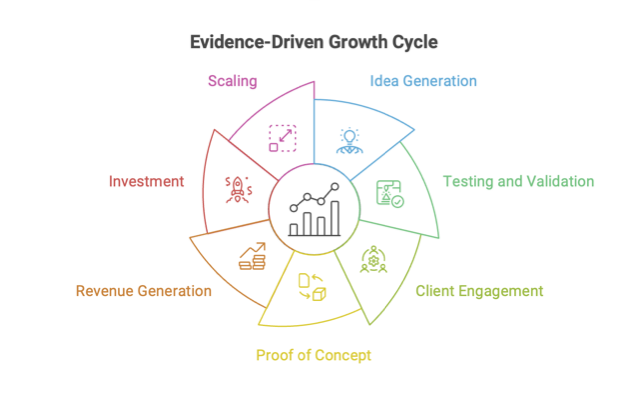
The idea came first.
The customer followed.
Then came validation, credibility, investment and scale.
followed evidence.
The Principal Takeaways
- Look for Opportunity Inside the Problem
Whisper began when its founders questioned the quality of existing sponsored content around Formula 1. Problems and frustrations can reveal unmet customer needs.
- Start With What You Already Have
Before investing in new capabilities, identify the knowledge, relationships, reputation and expertise your organization already possesses.
- Don’t Build Before You Validate
You do not need to create the entire organization before knowing whether customers will value your proposition. Test the idea first, then invest according to what you learn.
- Let Customers Help You Build the Business
The first client is more than a source of revenue. It can provide validation, credibility, feedback and a reference for winning the next opportunity.
- Being Small Can Be an Advantage
Smaller organizations can often move faster, experiment more easily and stay closer to customers. Scale is not automatically a competitive advantage.
- Let Growth Follow Evidence
Investment should follow validation. Once an idea demonstrates traction, the organization can increase its resources, capabilities and infrastructure around what is working.
- Think Big — But Build Step by Step
A large ambition does not require a large initial investment. Successful growth often comes from a sequence of disciplined decisions rather than one enormous bet.
The Question for Leaders
When considering your next new business, product, service or strategic initiative, don’t ask only:
“How much do we need to invest to make this happen?”
Also ask:
“What is the smallest investment that allows us to prove that this can work?”
And once you have the evidence:
“What would justify the next step?”
Because sometimes the path to a successful business is not to build everything first.
It is to build just enough to take the next step — and let success tell you what to build next.